




Please note the current updates below:
The Admission section has been updated with new fee structure on Saturday, 19th January 2012 around 4:45 PM (IST).
The Events section has been updated on Saturday, 05th January 2013 around 6:45 PM (IST).
New additions include confirmed events for 2013 replacing proposed events for 2013. |
HISTORY :
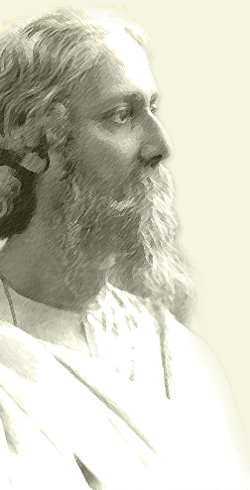
Founded in 1948 by Shri Suvo Guha Thakurta with the blessings of Rathindranath Tagore and Sailajaranjan Majumdar, it had Subinoy Roy, Suchitra Mitra, Sunil Kumar Roy and Kamala Basu among the first batch of teachers.
Suvo Guha Thakurta, a young, ardent devotee of Rabindrasangeet, used to frequent soirees held at Santiniketan and at the Brahmo Samaj, from the age of eighteen. His close association with Indira Devi Choudhurani, Sailajaranjan Majumdar, Kanika Bandopadhyay, Arundhati Devi led to numerous lessons in Rabindrasangeet under the tutelage of the first two.
Sailajaranjan had once expressed to Suvo Tagore’s lament that his music was increasingly getting limited to Santiniketan and the Brahmo Samaj, and not reaching the wide audience it deserved to do. Sailajaranjan expressed a wish to Suvo that some measure be taken whereby Rabindrasangeet could be brought to the Bengali masses. It had been Tagore’s firm belief that a day would come when Bengalis would recognize and appreciate the centrality of his songs in their lives. Henceforth committed to the cause and determined to see results, Suvo, after a few years of struggle, founded Gitabitan on the 8th of December, 1941 at a rented house in Bhowanipore. In no time it was flourishing as a Rabindrasangeet institution. However, due to differences in opinion regarding its functioning, Suvo Guha Thakurta dissociated himself from it in 1947 and founded Dakshinee on the 8th of May, 1948, at 132, Rashbehari Avenue.
IDEOLOGY: Exclusively practising and upholding Tagore music as a pure and high form of art, and imbibing and spreading a love for it in the hearts of people, especially in the face of diverse influences, remains till date, the expressed ideology of Dakshinee.
|